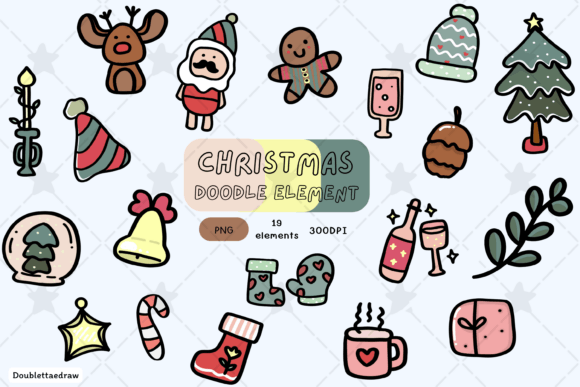
Christmas Doodle Elements Clipart PNG
As a designer who spends more time looking at stitch density and fabric grain than I do checking social media, I have learned to be skeptical of anything that looks too "perfect" on a screen. When I first pulled up the Christmas Doodle Elements Clipart PNG, my initial reaction was one of cautious optimism. The aesthetic is undeniably cozy, leaning heavily into that hand-drawn, sketchy vibe that has taken over modern craft spaces. But does it translate from a digital illustration into a tangible, wearable handmade product? That is the question every serious embroiderer needs to ask before sending a file to the machine.
I approached this review with a specific project in mind: a line of holiday-themed custom apparel and boutique gifts for an upcoming craft fair season. My goal was to see if these doodle elements could hold their own as a primary design feature or if they would serve better as subtle accents. Here is my practical breakdown of how this design asset performs in real-world embroidery scenarios.
The First Impression: Mood and Visual Personality
The immediate appeal of the Christmas Doodle Elements Clipart PNG lies in its approachability. Unlike traditional, rigid vector Christmas motifs that can feel stiff or overly corporate, these elements carry a sense of whimsy and warmth. The lines are loose enough to suggest a human touch, which resonates deeply with customers looking for authentic, artisanal goods. It feels less like mass-produced clip art and more like a page torn from a creative journal.
For an Etsy seller or a small shop owner, this visual personality is gold. It signals quality and care. When a customer sees a design that looks hand-sketched, even if it was digitized by a machine, they perceive higher value. The mood is festive but relaxed, making it suitable not just for overt holiday marketing, but for year-round cozy branding. It works beautifully for nursery decor, gentle baby items, and lifestyle home goods where you want to evoke comfort rather than just shout "Holiday Sale."
Real-World Application: From Screen to Stitch
Let’s talk about execution. I tested the concept of using these doodles on a few different substrates to see how they held up. The versatility of the machine embroidery design potential here is significant, provided you understand the limitations of the style.
- Tote Bag Design: This is perhaps the strongest use case. On a sturdy canvas tote, the doodle elements pop with character. Whether used as a large central motif or scattered across the bag, the loose lines forgive minor stitching imperfections better than tight geometric shapes. It gives off that trendy, indie-boutique vibe that sells well at craft fairs.
- Sweatshirt Embroidery: For holiday sweatshirts, these elements work best when simplified. A cluster of doodle ornaments or a single sketched reindeer head creates a focal point without overwhelming the garment. The key here is spacing; let the fabric breathe around the design so the texture of the knit doesn’t compete with the sketchy lines.
- Baby Embroidery: The soft, rounded nature of many doodle elements makes them ideal for onesies and burp cloths. They lack the sharp, aggressive angles of some other styles, making them visually safer and softer for infant wear. It adds a personal touch to a personalized gift that feels thoughtful rather than generic.
- Embroidered Patch: If you are creating patches for denim jackets or backpacks, the doodle style allows for interesting border treatments. You can use a satin stitch border that mimics the outline of the drawing, creating a cohesive look that blends the design with its frame.
In terms of brand consistency, having access to a cohesive set of design assets like this allows you to build a recognizable holiday collection. You can mix and match elements to create variety while maintaining a unified aesthetic across your commercial embroidery offerings.
Where Caution Is Required
No design is flawless, and transparency is part of responsible reviewing. There are specific situations where the Christmas Doodle Elements Clipart PNG requires careful handling to avoid a disappointing result.
First, consider the hoop size. Doodle designs often rely on fine lines and small details. If you attempt to downscale this design significantly to fit a tiny hoop, such as those used for jewelry tags or miniature ornaments, you will lose the integrity of the sketch. The lines may merge, turning your delicate doodle into a muddy blob. Always check the minimum recommended size before committing to a small project.
Second, fabric choice is critical. Textured fabrics, like heavy wools or bouclé knits, can obscure the subtle variations in a doodle line. Similarly, stretchy fabrics require excellent stabilization to prevent the design from distorting. If the fabric stretches during stitching, those carefully drawn curves will warp, ruining the intended shape. For curved surfaces like caps, the distortion factor increases, so test thoroughly on scrap material first.
Additionally, be mindful of thread colors against dark fabrics. Doodle art often relies on negative space and thin lines. On a black background, unless you use high-contrast white or metallic threads, the design might get lost. Conversely, on very light fabrics, ensure your thread weight is sufficient to stand out against the weave.
Technical Notes for the Discerning Designer
Before incorporating this into your workflow, keep these practical tips in mind:
- Stitch Density: Review the digitization for dense areas. Doodle styles should generally feel airy. If the fill stitches are too heavy, the fabric will pucker. Adjust the underlay or trim settings if necessary.
- Stabilizer Selection: Use a stabilizer appropriate for your fabric weight. For lightweight tees, a tear-away might suffice, but for woven bags, a cut-away provides better longevity, especially for items that will undergo frequent washing.
- Mockup Testing: Before stitching, view the design in black and white on your computer. This helps you assess the balance and composition without the distraction of color. It also reveals if the design has enough visual weight to stand alone.
- Licensing: As a craft business owner, verify the commercial use rights. Ensure you are allowed to sell finished products made from this digital embroidery file. Some licenses restrict the number of units you can produce.
Final Verdict: Does It Add Value?
Ultimately, the Christmas Doodle Elements Clipart PNG is a strong contender for designers looking to add warmth and personality to their holiday collections. It bridges the gap between digital convenience and handmade charm. For apparel decorators and makers, it offers a way to create products that feel special and curated.
It is not a magic bullet that fixes poor digitization or bad fabric choices, but as a foundational design element, it excels. It encourages creativity, supports brand storytelling, and appeals to customers who value authenticity. If you treat it with the respect due to any detailed embroidery project—testing, planning, and executing with care—it will serve you well. For those ready to expand their Illustrations library with something that feels both festive and fashionable, this is a worthy addition to your toolkit.