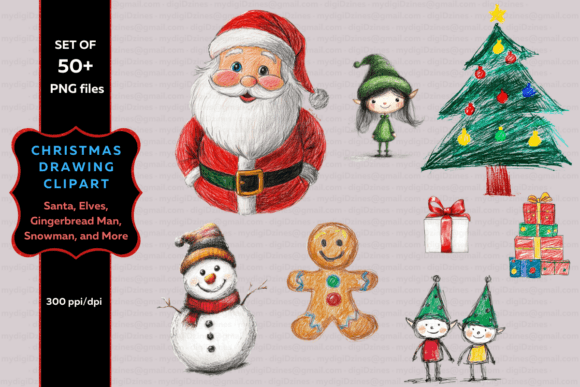
Christmas Drawing Clipart Review for Embroidery
As a designer who spends more time at the embroidery machine than in the office, I approach every new digital embroidery file with a mix of excitement and skepticism. You have likely seen my work on custom apparel and boutique items, where the difference between a mass-produced look and a handcrafted treasure often comes down to a single design choice. Today, I am evaluating the Christmas Drawing Clipart from the Illustrations category to see if it truly holds up when translated from a screen to a stitched reality.
The first impression of this design is crucial. Does it feel like a quick digital sketch, or does it possess the weight and personality required for a finished product? In my experience, machine embroidery design relies heavily on the visual language of the source art. The Christmas Drawing Clipart immediately evokes a cozy, nostalgic mood. It feels less like a rigid corporate graphic and more like a warm sketch found in an old storybook. This specific visual personality suggests that it belongs naturally in projects intended to evoke comfort and tradition, rather than high-tech modern aesthetics.
Let me take you through a real scenario where I tested this asset. I was preparing a limited run of holiday gifts for a local boutique client. They needed something unique for their staff sweaters and a set of personalized kitchen towels. The goal was to create a handmade product line that felt cohesive but not generic. When I placed the Christmas Drawing Clipart onto a mockup of a heavy cotton sweatshirt, the design held its own. The lines were distinct enough to suggest a hand-drawn quality without losing clarity. However, when I considered using it on a small baby onesie, the dynamic changed.
This brings us to the practicalities of how Christmas Drawing Clipart performs in various embroidery project contexts. For custom apparel like sweatshirts, t-shirts, and tote bags, this design shines. The layout allows for a central focal point that works beautifully on the chest of a garment or centered on a large tote bag. The style translates well into satin stitch for outlines and fill stitch for solid areas, giving the final result a textured, tactile appeal that customers love to touch. If you are an Etsy seller looking to boost your craft business, designs with this kind of "sketchy" charm often sell better because they imply care and effort, even if the production process is streamlined.
However, not every application is suitable. There are specific scenarios where you must exercise caution. If you plan to use this on a curved surface like a cap or hat, the geometry of the drawing might distort slightly depending on the curvature. While many embroidery files handle curves well, a drawing-heavy clipart can sometimes lose definition on tight curves. Similarly, if you are working with thin or stretchy fabrics, such as lightweight jersey or sheer materials, the density of the stitches required to make the drawing visible could cause puckering. In these cases, the structural integrity of the fabric fights against the design.
I also had to consider the limitations of small hoop sizes. If you are creating tiny embroidered patches or decorative accents for a child's outfit, the detail level of the Christmas Drawing Clipart needs scrutiny. Tiny details often get lost in the stitching process, especially if the thread colors do not provide enough contrast. A design that looks crisp on a monitor can become a muddy blob if the stitch density is too high for the available space. Therefore, before committing to a full production run, I strongly advise testing the design on scrap fabric first. This step is non-negotiable for any professional aiming for a polished finished product.
When discussing visual appeal, the Christmas Drawing Clipart offers a distinct advantage: it avoids the sterile look of vector graphics. In a market saturated with identical machine-made designs, a drawing-style aesthetic stands out. It enhances the perceived value of your item. Customers are willing to pay more for a personalized gift that looks like it has soul. Whether you are designing a holiday pillow cover, a tea towel, or a nursery decor piece, this design adds a layer of warmth that pure geometric shapes cannot achieve. It helps build brand consistency for shops that want to position themselves as artisanal and thoughtful.
But let's talk about the technical execution, which is where many designers stumble. To get the best results with this illustration, you need to think about thread colors carefully. Because the original is a drawing, it likely relies on negative space or fine lines. If you choose a thread color that blends too much with the fabric texture, the design will disappear. Conversely, if the background fabric is dark, you may need to adjust the design or add a stabilizer that prevents the threads from sinking into the weave. Checking whether the design works for both light and dark backgrounds is essential before you start stitching.
For those of you selling digital products or offering commercial services, understanding the licensing is vital. While the Christmas Drawing Clipart is categorized under Illustrations, you must confirm the terms regarding commercial use. Can you sell the finished physical items? Can you resell the digital file itself? These distinctions protect your small shop product line from legal issues. Always verify the license before using any asset in a commercial context.
Here are some practical notes from my studio to ensure your next project is a success:
- Test on Scrap Fabric: Never go straight to the customer's garment. Run a test on a similar fabric type to check for puckering or distortion.
- Review Stitch Density: Ensure the fill areas are not too dense, which can make the fabric stiff and uncomfortable, especially for baby clothing.
- Check Small Details: Zoom in on the design elements. Are there tiny corners that might not stitch cleanly? Simplify if necessary.
- Mockup in Black and White: Convert the design to grayscale to see how the contrast holds up without the distraction of color.
- Use Proper Stabilizer: The right stabilizer is the backbone of a good embroidery job. For a drawing-style design, a cut-away stabilizer often provides the best support for delicate lines.
- Compare Backgrounds: Test the design on both light and dark fabrics to ensure versatility for your holiday embroidery collection.
If you are considering adding this to your repertoire of design assets, know that it fits perfectly into the current trend of rustic and vintage-inspired holiday decor. It is ideal for aprons, blankets, and boutique branding where a soft, inviting look is desired. However, if you are looking for a bold, high-contrast logo for a sports team or a highly detailed portrait, this might not be the strongest candidate.
In conclusion, the Christmas Drawing Clipart is a versatile tool for the creative entrepreneur. It bridges the gap between digital convenience and handmade charm. By respecting its limitations and leveraging its strengths, you can create stunning custom apparel and gifts that resonate with buyers. Just remember, the magic happens in the details—check your thread colors, secure your fabric, and trust your eye. When done right, a simple drawing can transform a standard item into a cherished keepsake.