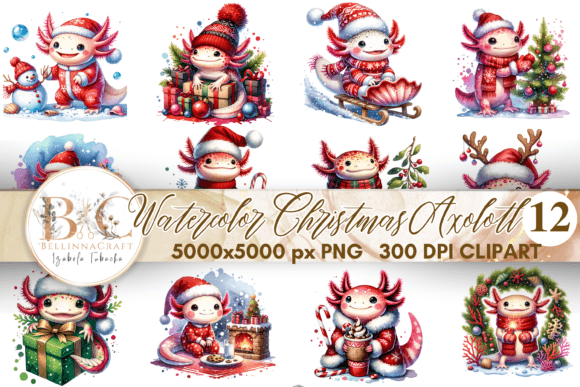
Watercolor Christmas Axolotl Clipart
As a designer who spends half her life staring at stitch charts and the other half trying to sell finished goods, I have learned that not every cute digital image translates well into thread. There is a specific moment when you import a file into your embroidery software where you pause and ask: "Will this actually look good stitched?" Today, I am putting Watercolor Christmas Axolotl Clipart through that exact stress test. This isn't just about whether the pixel art looks nice on a screen; it is about how it behaves under the needle, how it holds up on fabric, and whether it will resonate with customers browsing Etsy or walking through a craft fair.
The First Impression: Mood and Visual Personality
When I first opened the design assets for this piece, the immediate takeaway was the softness of the aesthetic. The watercolor style brings a gentle, organic feel that stands in stark contrast to the rigid geometry often found in traditional holiday motifs like snowflakes or ornaments. The axolotl itself is rendered with a whimsical charm that feels approachable rather than cartoonish. It has a certain innocence that works exceptionally well for niche markets.
The color palette, implied by the title and typical of this genre, suggests muted pinks, festive reds, and perhaps some subtle greens or golds. For an embroidery designer, this is a double-edged sword. Watercolor gradients are beautiful digitally, but they do not exist in standard polyester or cotton thread. You cannot simply load a spool of "watercolor pink." Instead, this design forces you to make creative decisions about thread colors and shading techniques. It demands a thoughtful approach to thread colors, likely requiring multiple shades to mimic the bleed effect of the original illustration.
Real-World Application: From Screen to Stitch
I decided to test this concept on a practical project: a custom embroidered tote bag for a holiday gift shop client. The goal was to create a unique, giftable item that stood out from the usual mass-produced Christmas merchandise. The tote bag design needed to be eye-catching but not overwhelming. Placing the axolotl in the center of a heavy canvas tote felt right. The juxtaposition of the cute, mythical creature against the rugged texture of the canvas creates a visual tension that grabs attention.
However, moving from the digital mockup to the physical embroidery project required adjustments. The watercolor edges are soft and blurry. In embroidery, we rely on defined lines. To make this work, I had to decide whether to use a dense fill stitch to block out the shape or rely on a combination of satin stitch outlines and lighter fill areas. I opted for a medium-density fill to represent the body, which allowed the texture of the thread to catch the light and simulate the wet look of paint. The result was surprisingly effective. The customer didn't see "pixels"; they saw a textured, tactile representation of the character.
This same logic applies to other custom apparel items. Imagine this design on a cream-colored sweatshirt. The sweatshirt embroidery would benefit from the cozy, handcrafted vibe. It fits perfectly into the current trend of "cozy winter" aesthetics. It also translates beautifully to baby embroidery. A onesie or a nursery wall hanging featuring this design taps into the massive market for gender-neutral, whimsical baby gifts. Parents are looking for items that feel personal and artistic, and this clipart delivers that emotional connection.
Where Caution Is Required
While the design has strong appeal, it is not without its pitfalls. An experienced designer knows that machine embroidery design requires strict adherence to technical limits. Here is where you need to be careful:
- Small Hoop Sizes: If you attempt to digitize this into a tiny hoop size (under 3x3 inches), you risk losing the definition of the axolotl’s features. The gills and facial expressions might become muddy blobs. Keep the minimum size generous enough to allow for detail.
- Textured Fabrics: Avoid placing this on bouclé, heavy wool, or highly textured knits. The fabric texture will interfere with the smooth lines needed to convey the watercolor style. Stick to smooth cottons, linens, or stable blends.
- Stretchy Fabrics: Using this on thin, stretchy jersey material without proper support can lead to puckering. The density of the fill stitches may pull the fabric out of shape, distorting the cute face of the axolotl.
- Dense Stitch Areas: If the original illustration relies on fine, detailed shading, ensure your digitizing software converts those details into manageable stitch lengths. Too much density in one spot creates a stiff, cardboard-like patch that lacks drape.
Technical Considerations for the Smart Maker
Before committing to a production run, there are several non-negotiable steps I recommend for any craft business owner or Etsy seller.
- Test on Scrap Fabric: Always run a test stitch on the actual fabric you plan to use. Check how the stabilizer interacts with the material. Did you need cut-away or tear-away? How did the back of the design look?
- Check Thread Contrast: Watercolor styles often rely on low-contrast blending. Ensure your chosen threads provide enough contrast against the background fabric so the design doesn't disappear. On dark fabrics, you may need a white underlay or backing to make the colors pop.
- Inspect Small Details: Zoom in on the digital file. Are there tiny elements that won't stitch well? Simplify them if necessary. A slightly simplified axolotl is better than a broken needle.
- Black and White Mockups: Convert the design to grayscale to check its value structure. If it looks flat in black and white, it will likely look flat in color too. Adjust the shade distribution before stitching.
Commercial Viability and Brand Consistency
From a business perspective, Watercolor Christmas Axolotl Clipart offers high versatility. It fits seamlessly into a broader brand identity focused on nature, whimsy, and holiday cheer. It is distinct enough to build recognition but generic enough to fit various product lines. Whether you are creating personalized gifts, holiday embroidery collections, or digital product previews for print-on-demand services, this asset adds value.
It also appeals strongly to the "giftability" factor. People buy these items as presents because they feel unique and thoughtfully made. An embroidered patch version could be sold separately for people to iron onto denim jackets or bags, expanding your revenue streams. As a small shop product, it helps differentiate your inventory from competitors selling standard Santa Claus designs.
Final Verdict
Does it work? Yes, absolutely. But only if you respect the medium. Embroidery is not printing. It is a textile art form that requires planning, testing, and an understanding of how thread interacts with fabric. When used correctly, this design transforms from a simple digital image into a tangible, high-quality finished product that customers will cherish. It bridges the gap between modern digital art and traditional craftsmanship, offering a fresh take on holiday decor that feels both nostalgic and new.
If you are ready to expand your catalog with something that combines cuteness, seasonality, and artisanal quality, this is a strong candidate. Just remember to check your hoop size, verify your licensing for commercial use, and always, always test first. Happy stitching.